
How Does Teletherapy Work for Anxiety Treatment?

What Is Teletherapy for Anxiety Treatment?
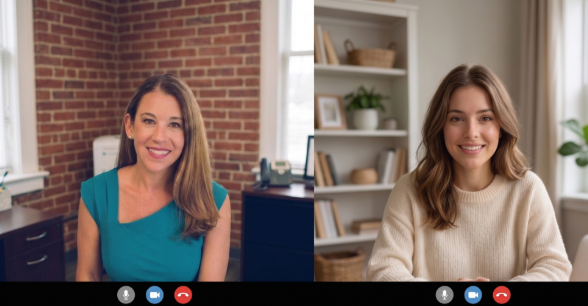
Teletherapy for anxiety treatment is a clinically supervised, technology-mediated psychological intervention that delivers evidence-based therapeutic modalities, including cognitive behavioral therapy (CBT), somatic experiencing, and eye movement desensitization reprocessing (EMDR), through a secure, HIPAA-compliant videoconferencing platform. It eliminates geographic and logistical barriers to mental health care, enabling licensed trauma psychotherapists to guide patients through structured neurobiological protocols from their own homes.
Anxiety affects more than 40 million adults in the United States, yet fewer than 37% receive treatment, according to the Anxiety and Depression Association of America. Teletherapy directly addresses this treatment gap. Research published by the American Psychological Association confirms that remote mental health services successfully eliminate physical and geographic barriers, facilitating consistent therapeutic access for diverse populations. For individuals managing generalized anxiety disorder, panic disorder, or trauma-related conditions, the ability to access care from a familiar environment often reduces baseline physiological arousal, optimizing the brain's receptivity to clinical intervention from the very first session.
How Does the Brain Respond to Virtual Anxiety Treatment?
Effective teletherapy works by directly regulating the autonomic nervous system, the biological command center governing the body's threat and safety responses. Neuroscientist Dr. Stephen Porges' polyvagal theory, extensively documented by the Polyvagal Institute, explains that the nervous system continuously scans the environment for cues of safety or danger through a process called neuroception. In individuals with chronic anxiety, this internal alarm system becomes chronically miscalibrated toward threat detection, producing persistent hyperarousal even in the absence of real danger.
Virtual therapy environments counter this pattern by transmitting precise safety cues across the digital interface. Skilled teletherapists use regulated vocal prosody, sustained eye contact through the camera lens, and a highly predictable session structure to communicate neurological safety directly to the client's nervous system. Becky VanDenburgh, an EMDR-certified Licensed Clinical Social Worker and founder of Think Well Live Well Counseling and Telepsychiatry in Indiana, explains this dynamic clearly: "Virtual therapy fundamentally transforms the healing dynamic by allowing the patient to retain absolute physical autonomy; this inherent control drastically reduces the hypervigilance associated with clinical spaces and accelerates the resolution of severe attachment trauma." When clients feel physically safe in their own environment, the ventral vagal state, associated with calm, social engagement, and emotional regulation, becomes far more accessible.
What Therapy Modalities Are Used in Online Anxiety Treatment?
Teletherapy for anxiety treatment incorporates several rigorously validated clinical modalities, each adapted for effective delivery over a secure digital interface. The three most widely utilized approaches are cognitive behavioral therapy (CBT), somatic experiencing, and EMDR.
Cognitive Behavioral Therapy (CBT) targets the maladaptive thought patterns that sustain anxiety. A meta-analysis published in Clinical Psychology & Psychotherapy reported an exceptionally large effect size of Hedges' g = 1.34 for virtual CBT, exceeding many benchmarks established by traditional in-person delivery. Sessions conducted via telehealth allow therapists to assign real-time behavioral experiments within the client's actual living environment, accelerating the generalization of new coping skills.
Somatic Experiencing addresses anxiety at the physiological level through interoceptive inquiry, a structured process of guiding clients to notice and track bodily sensations, muscular tension, and respiratory changes in real time. Rather than overriding physical distress with cognitive analysis, this bottom-up approach uses titration and pendulation to discharge trapped survival energy from the nervous system gently. Clinical documentation indexed in PubMed Central confirms that somatic experiencing produces significant reductions in anxiety symptoms, with effect sizes ranging from 0.94 to 1.26.
EMDR uses bilateral stimulation, visual tracking of a moving target, alternating auditory tones, or tactile tapping, to facilitate the brain's adaptive information processing system. In virtual sessions, bilateral stimulation is seamlessly delivered via digital light bars embedded in telehealth platforms or through client-directed techniques such as the butterfly hug. Multiple randomized controlled trials confirm that these remote adaptations produce statistically identical reductions in distress to those achieved with in-person administration.
How Does Teletherapy Compare to In-Person Anxiety Treatment?
The clinical evidence overwhelmingly supports teletherapy as a statistically equivalent alternative to traditional in-person psychotherapy for anxiety. The following table summarizes key comparative metrics drawn from published meta-analyses:
Clinical Metric | In-Person Psychotherapy | Video-Delivered Teletherapy | Statistical Finding |
Symptom Reduction (Anxiety) | High remission rates | High remission rates | Equivalent — Hedges' g = 0.99 pre-post |
CBT Efficacy | Standard benchmark | Meets or exceeds benchmark | Hedges' g = 1.34 |
Treatment Completion | Industry average | Frequently higher | Telehealth reduces logistical dropout |
EMDR Patient Comfort | 100% baseline standard | 88% extremely/very comfortable | Statistically comparable satisfaction |
Therapeutic Alliance | Standard benchmark | Equivalent alliance scores | No statistical difference recorded |
Source: Meta-analysis published in Clinical Psychology & Psychotherapy (PubMed ID: 33826190)
Beyond clinical equivalence, teletherapy offers distinct advantages for specific populations. A large-scale study detailed in the National Center for Biotechnology Information found that 93% of patients were highly enthusiastic about recommending online EMDR to others. Individuals with agoraphobia, neurodivergent sensory processing differences, or demanding professional schedules frequently report that the virtual format removes critical barriers that would otherwise prevent them from seeking care at all.
VanDenburgh, whose Indiana-based practice specializes in trauma-informed telepsychiatry, integrates this research into her clinical framework: "By synthesizing somatic interventions with traditional cognitive restructuring over a secure digital platform, we successfully dismantle unhelpful coping strategies and rapidly replace them with highly effective, biologically grounded regulation skills."
What Technology and Safety Standards Does Teletherapy Require?
Safe and effective teletherapy requires a robust technological and clinical infrastructure. At minimum, providers must utilize a HIPAA-compliant, end-to-end encrypted videoconferencing platform, a high-resolution webcam, and a reliable external microphone capable of capturing subtle vocal prosody cues essential to the therapeutic process. Clients must conduct sessions from a private, distraction-free environment to preserve the psychological container necessary for trauma processing.
Crisis management protocols are a non-negotiable professional standard in virtual trauma care. At the start of each therapeutic relationship, the clinician must verify the client's exact physical address to facilitate emergency dispatch if acute psychiatric distress arises. A collaboratively developed safety plan, including grounding techniques, crisis hotline numbers, and local support contacts, must be established before any active trauma reprocessing begins. These protocols ensure that the absence of physical co-presence does not compromise patient safety at any point during treatment.
Frequently Asked Questions About Teletherapy for Anxiety
Is teletherapy as effective as in-person therapy for anxiety?
Yes. Comprehensive meta-analyses confirm that video-delivered psychotherapy produces outcomes statistically equivalent to traditional in-person treatment for anxiety disorders. The overall pre-post effect size for virtual psychotherapy is Hedges' g = 0.99, and treatment completion rates are frequently higher in telehealth populations due to the elimination of commuting barriers.
Can EMDR be done effectively online?
Virtual EMDR is clinically effective. Bilateral stimulation delivered via digital light bars, auditory tones through stereo headphones, or tactile self-tapping produces the same neurological mechanism of adaptive memory reconsolidation as in-person administration. Multiple randomized controlled trials verify statistically identical reductions in Subjective Units of Disturbance (SUD) scores regardless of delivery format.
What types of anxiety does teletherapy treat?
Teletherapy treats a broad spectrum of anxiety presentations, including generalized anxiety disorder, panic disorder, social anxiety disorder, complex post-traumatic stress disorder, high-functioning anxiety, and anxiety rooted in developmental attachment wounds or intergenerational trauma patterns.
How long does online anxiety therapy take?
Duration depends on diagnostic complexity. Discrete single-incident trauma may resolve within 8–12 weekly EMDR sessions. Complex post-traumatic stress disorder or deep-rooted attachment wounds typically require a longer treatment timeline, with the initial stabilization and resourcing phase alone spanning several months of weekly sessions.
How does Becky VanDenburgh approach teletherapy at Think Well Live Well?
At Think Well Live Well Counseling and Telepsychiatry, VanDenburgh employs an integrative clinical approach combining CBT, cognitive behavioral therapy, DBT, dialectical behavior therapy, somatic experiencing, and advanced EMDR to treat complex anxiety disorders via a secure digital platform. Her methodology prioritizes nervous system regulation alongside cognitive restructuring, ensuring clients develop durable emotional regulation skills grounded in both neuroscience and lived experience.
Ready to Start Healing? Schedule Your First Session Today.
Anxiety does not have to run your life. Whether you are navigating generalized anxiety, panic disorder, complex trauma, or the quiet exhaustion of high-functioning anxiety, evidence-based teletherapy can help you regulate your nervous system and reclaim your peace, from the comfort of your own home.
Becky VanDenburgh, LCSW, specializes in trauma-informed virtual therapy for adults across Indiana, integrating EMDR, somatic experiencing, and cognitive behavioral therapy into a personalized treatment plan built around your unique neurobiological needs.
Taking the first step is simpler than you think.
Secure, HIPAA-compliant telehealth platform. Indiana residents only.
Becky VanDenburgh, LCSW, is an EMDR-certified trauma psychotherapist and founder of Think Well Live Well Counseling and Telepsychiatry, serving clients across Indiana via secure telehealth. Learn more at thinkwelllivewell.co.


Comments